Breaking Under Pressure: A Concrete Guide to What Not to Do

December 2024

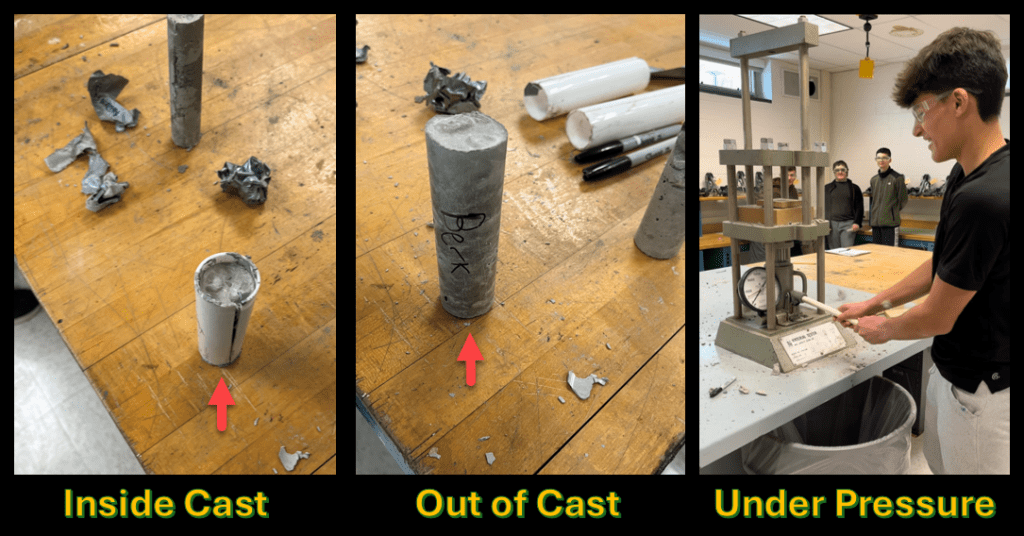
In our Civil Engineering & Architecture class, we explored the properties of concrete and its countless applications. Then came the hands-on part: creating our own concrete mixes and testing them in the lab.

We were provided with cement, sand, various aggregates, and water. With our own concrete “recipes” ready to go, we measured out the ingredients, mixed up our batches, and poured them into PVC pipe molds. Next step: waiting three long weeks for them to cure.

Once cured, we removed the casts and put our samples through compression testing to determine their maximum strength. My sample failed at 3,000 psi, falling short of our teacher’s benchmark of 4,500 psi.

Here’s what I learned from the experience:

  • This isn’t pancake batter. The mix doesn’t need to be overly liquid.
  • Hold your temptation to add water. Water is not your friend.
  • Don’t skimp on aggregates. They add crucial strength.
  • Mix thoroughly. Homogeneity is key.
  • Compact well. Air pockets ruin everything, and lowers your final grade.

Concrete may seem simple, but it’s all about precision, patience, and resisting the temptation to “eyeball it.”
Imagination at Work: Designing a house

November 2024

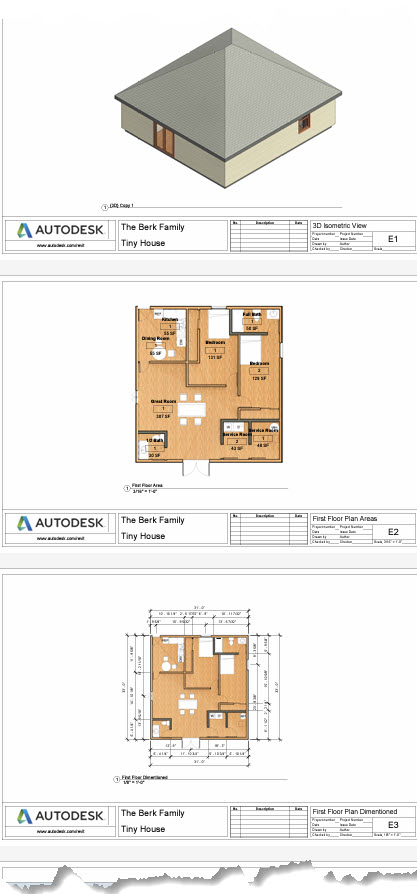
I recently completed an exciting project in Civil Engineering & Architecture class, and I thought you’d enjoy seeing my final work! I designed a 1,000-square-foot house using Autodesk Revit. While the software felt overwhelming at first, I’m amazed at how much I’ve learned and can now accomplish with it.

Next week, our teacher mentioned we’ll dive into estimating the cost of a residential structure, which I’m really looking forward to. I can’t wait to share everything I’ve learned with you!


A slice of home – juicy details of joints

September 2024

This year, I’m taking a Civil Engineering & Architecture class—a dual enrollment course offered by my high school. I’ve been eager to dive into these topics, inspired by both my mom and grandfather, who are Civil Engineers.

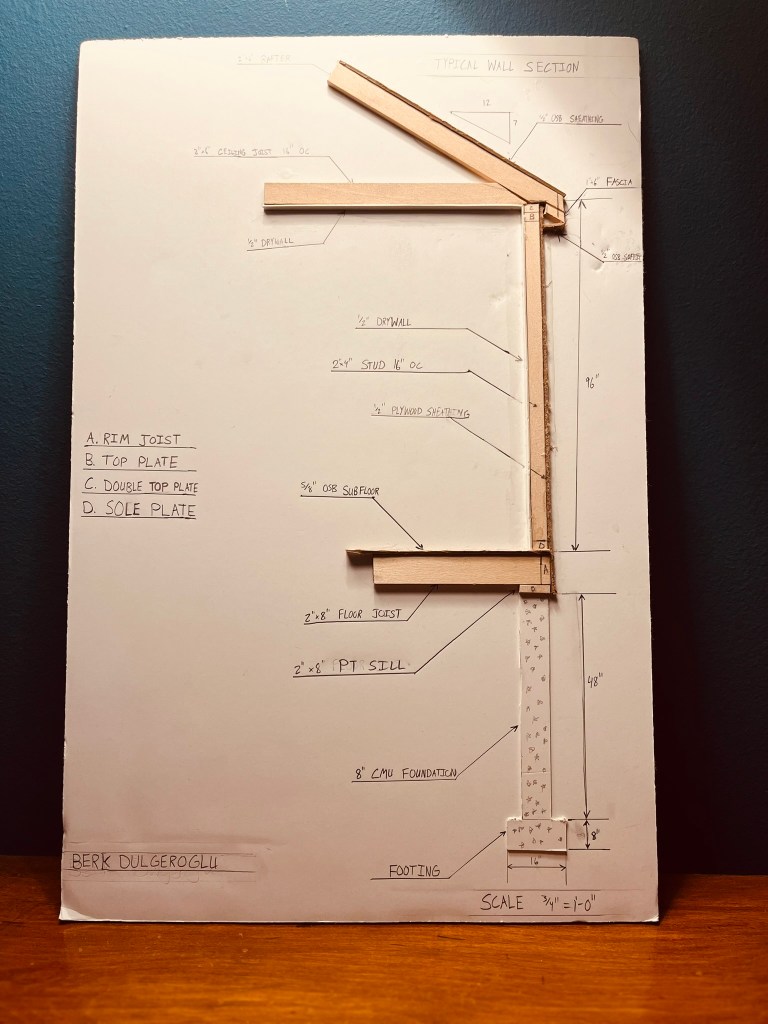
Above is my cross-sectional mockup of a one-story house, showcasing the various joints and materials from foundation to roof. It’s been the perfect hands-on way to understand the materials and connections that keep structures stable and secure.

Kaizen in clawbot design

February 2024

Kaizen is a Japanese philosophy that means “continuous improvements”..

Since the beginning of the year, we have been making improvements on our clawbots with various sensors and additional code.

On our first version back in October, our robot had to have manual code for its 90-degree turns and forward movements to go from point A to B in a shortest possible time. Here is a sample demo video recording during grading.

In our last version in February, our robot is equipped with many more sensors that allow autonomous code (the programmer only codes for actions in response to data gathered by sensors and the robot paths the course itself ). In this example we have the robot move along a waved black path on the ground. In addition, it can grab, carry and unload articles by its claws from point A to B. Here is our sample demo video.

Creating a Robot for Vex Dragster Race

November 2023

We were tasked to create a robot for the Vex Dragster Race.

Building the robot was difficult because you needed to balance low weight with structural stability. After testing me and my partner came up with the design of a small robot with two back wheels and only a single front one with the gears and motor connected to the back wheels from the outside of the robot. In the end we had a tough race for first that came down to tenths of a second which we unfortunately lost, but 2nd place out a full classroom is still good.

Principles of Engineering

May 2023

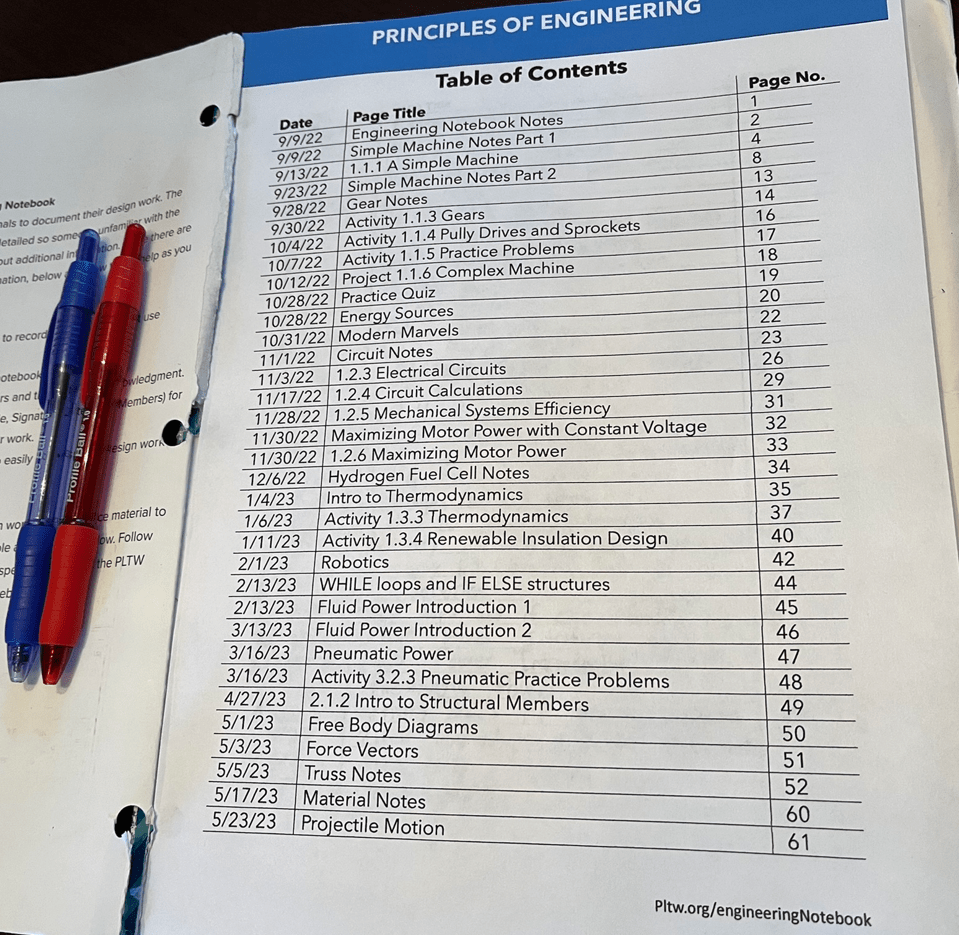
I completed the Principles of Engineering course at school provided by Project Lead the Way (PLTW). 

The course curriculum included the core components of each engineering major. Such as Simple Machines & Gears from Mechanical Engineering, Thermodynamics from Chemical Engineering, Circuits from Electrical Engineering, Structural Members and Trusses from Civil Engineering, and Robotics and Programming Structures from Computer Engineering.

We learned how to apply these main engineering principles to solve problems.

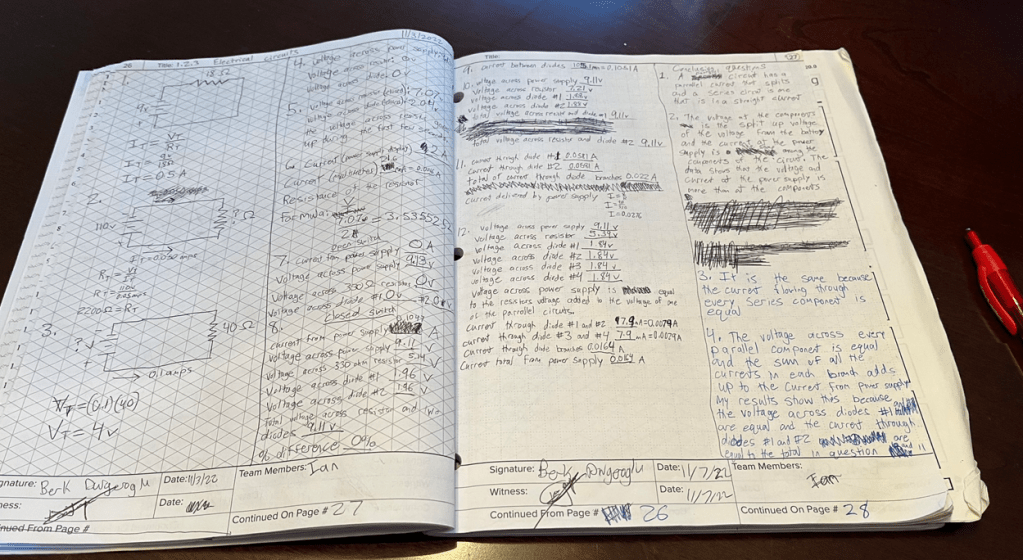
Don’t think that my notes were always clean and printed out. I sketched my solutions, sometimes scratched my answers, but kept good notes. 

Course: Principles of Engineering / PLTW

Designing a Simple Automaton

June 2022

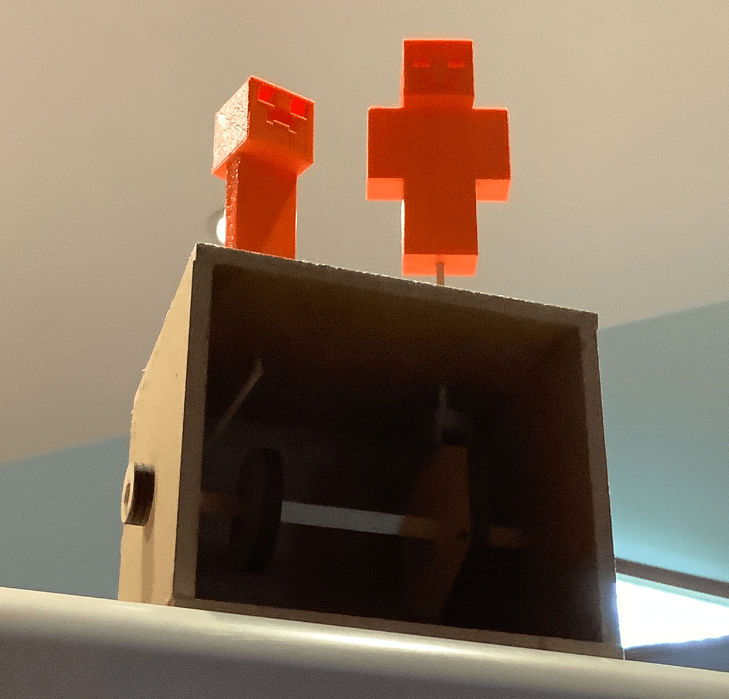
The project started with us designing the boxes in Autodesk Inventor.  Our teacher talked to us about the assembly lines, how each person can have one job and the product is passed from one person to another down the line.  He told us that the production speed is determined by the slowest person. To observe this fact, we built our own boxes in an assembly line.  One teammate measured, another drilled, and the last glued the wood.

Next, we had to design our cams and cam followers (shapes that are placed inside the box to create the motion), and objects in Autodesk Inventor.  I chose to use a circle and a hexagon as my cams and two figures from Minecraft – Steve and a Creeper as my animated objects.  We used laser cut wood to create our cams / followers and a 3D printer for the objects.  Unfortunately, we had only orange colored 3D material, so I ended up with an orange Creeper instead of a green one.

Course: Design and Drawing for Production PLTW

Tools used:

  • Autodesk Inventor
  • Laser Cutter
  • 3D Printer

3D Modeling Project

March 2022

I reverse engineered an Automoblox Car – a toy car for children.

My first step was to measure the car using Dial Calipers. Later, I  modeled all the parts of the car in a 3D modeling software and created working drawings for the original car.

And as a last step, I reviewed the design with my teammates, and came up with design improvements. I am so proud of what I have accomplished!!!